For many senior living communities, collecting fitness data is the easy part. The bigger question is what to do with it.
At Plymouth Place, data has become more than a way to track numbers. The team uses it to encourage participation, recognize progress, adjust individual fitness programs, and better understand how residents are using their fitness center. And perhaps most importantly, the data gives staff more time to do what they do best: interact with residents.
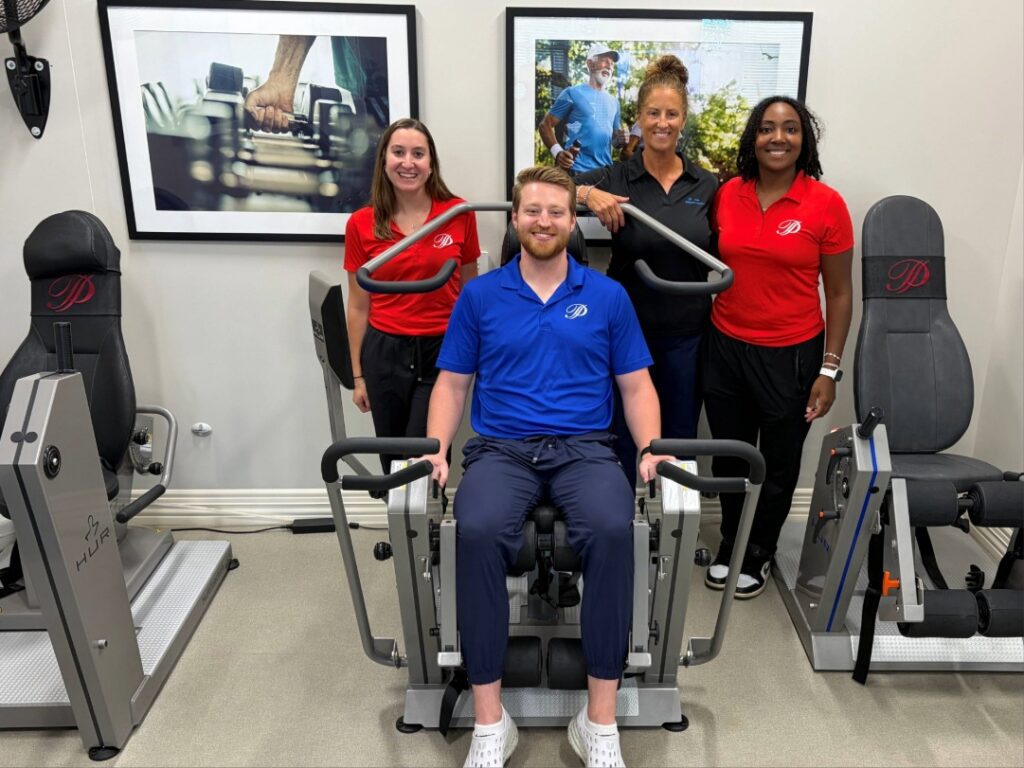
We recently spoke with Stefanie D’Anna, Wellness Manager at Plymouth Place, about how her team is turning fitness data into action.
Q: How does Plymouth Place use fitness data to engage residents?
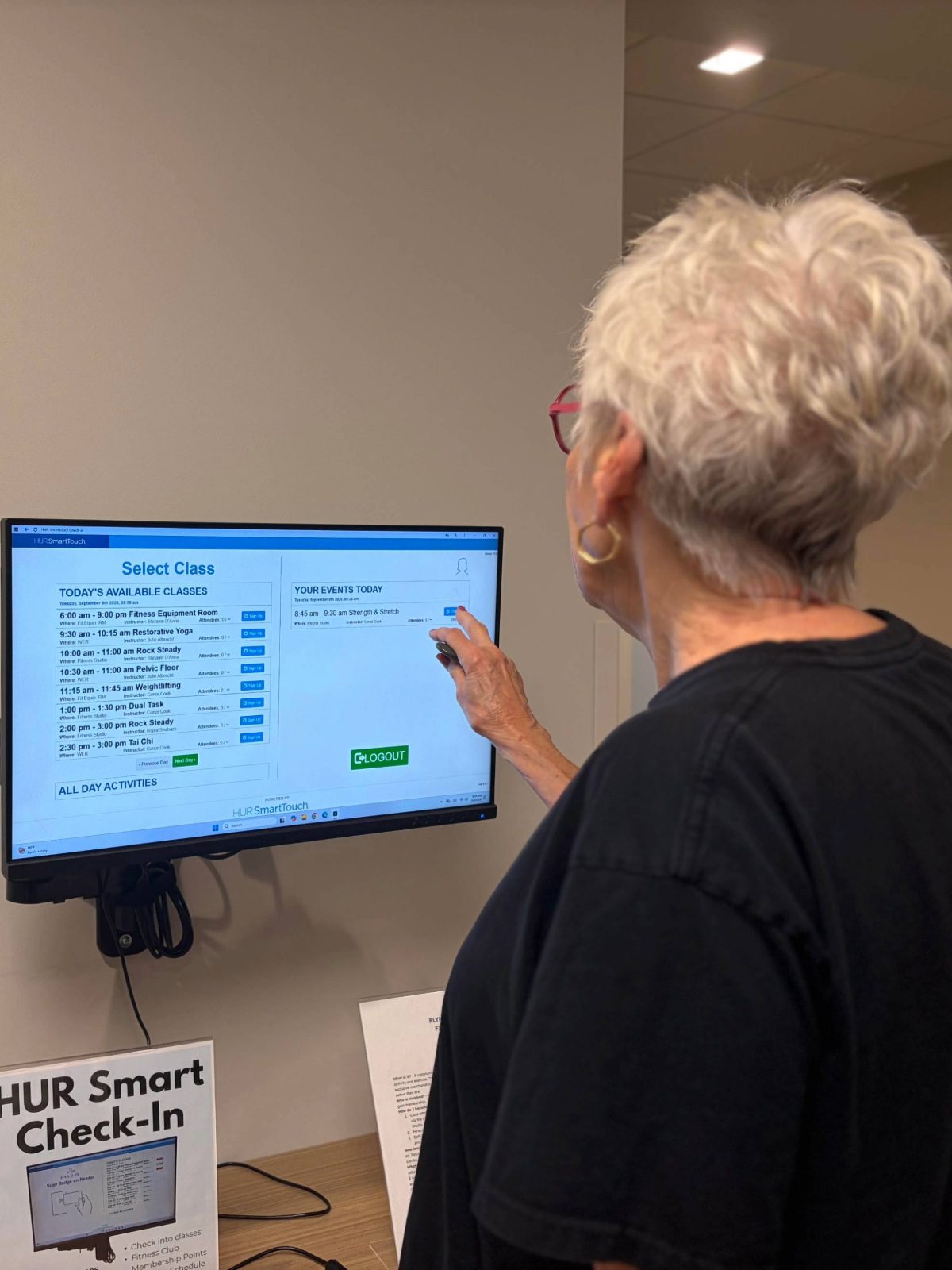
Stefanie: We started the Plymouth Place Fitness Club in January 2025 as a way to encourage residents to participate in fitness and wellness programs. The idea was originally developed by one of our Fitness Coordinators, Conor Cook, and it has grown into a really meaningful part of our wellness program. Residents earn points for attending fitness classes, lectures, and other wellness-related activities, with 90 points being the baseline to become a Fitness Club member.
Originally, we tracked everything with pen and paper and then entered it into an Excel spreadsheet. Now, with HUR Smart Check-In, that information is collected automatically, so it's much easier for us to see who's participating and how often.
The data gives us a really good picture of engagement, but more importantly, it gives us information we can actually use.
Q: How do you use fitness participation data to increase resident engagement?
Stefanie: We wanted the Fitness Club to be something people genuinely wanted to be a part of. Once residents reach 90 points, they're officially members and receive a special Plymouth Place Fitness Club T-shirt and lanyard. Beyond this, there are additional milestones where they can earn experiences and other perks.
It creates a sense of exclusivity and gives people something to keep working toward. They see that next level and think, “Okay, I want to get there.”
But the group has become more than just a way to motivate people. They've really become our ambassadors, as well as our wellness committee. When we're thinking about adding a new class or planning an event, we'll go to that core group and ask, “What do you think? Would people be interested in this?”
So we're using the data to build a community of people who are highly engaged and then using their feedback to help make our programs even better.
Q: How do you use fitness data to track resident progress and personalized fitness programs?
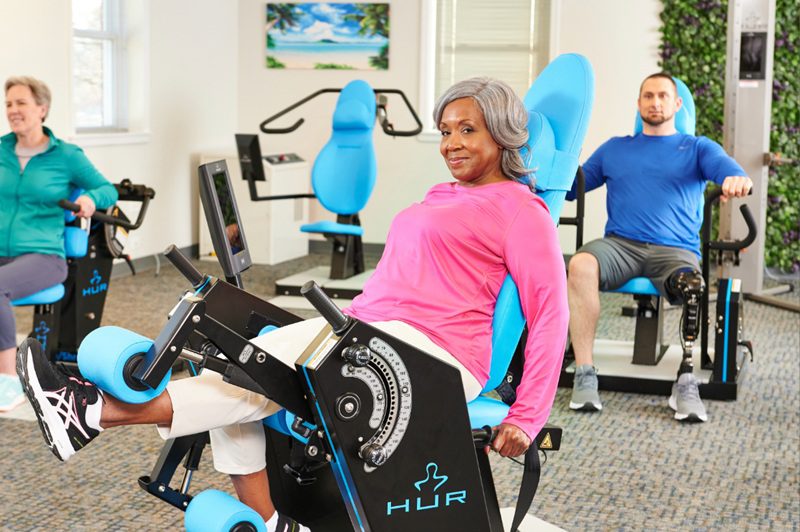
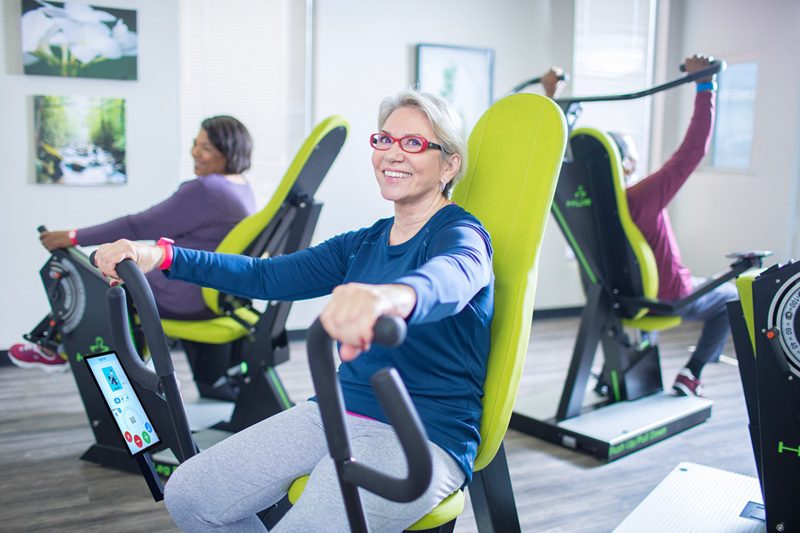
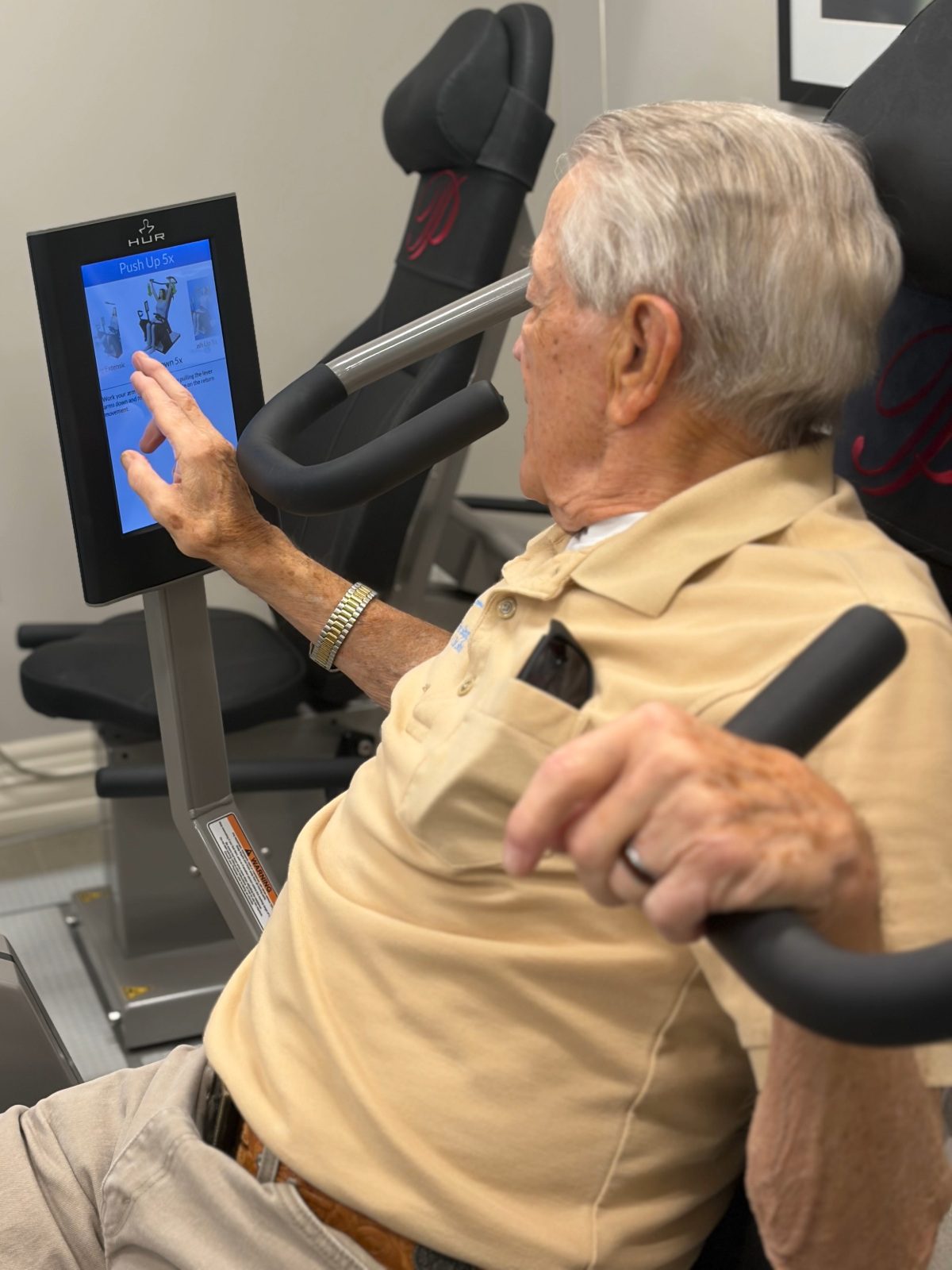
Stefanie: That's where it gets really valuable for our trainers. With the HUR SmartTouch equipment, we're able to see the gradual progression from one session to the next. For example, maybe someone starts with two sets of eight repetitions at five pounds on the leg press, and then by week six they're doing three sets of twelve and have worked their way up to 25 pounds.
We can see that whole progression, whether they worked with us during a personal training session or came down and worked out on their own. So we're getting really valuable information about both strength and endurance.
We can then use that information to adjust and modify their program. We can tweak their sessions based on what we're seeing and help them continue their progress, while also giving them the confidence to work out independently.
It's also really nice because we can show residents what they're doing. Sometimes the progress is slow, and it's hard to recognize how much you've actually improved.
Especially with our senior population, “if you don't use it, you lose it.” This is very true. So even if someone is maintaining where they are, we'll take that as a win because they're not declining. They're maintaining their baseline.
And sometimes you have an off day. Things happen. It's good to have that information because we can make a note of why there was a dip and then work toward getting them back to where they were.
Q: How does fitness data provide a baseline after an injury, surgery, or change in health?
Stefanie: It's really helpful to be able to look back and see where someone was before.
Our outpatient therapy clinic has access to the fitness center where the HUR equipment is located. Many of our residents work with the therapy team before or after surgery or other health events, and having access to their previous fitness information helps provide a clearer picture of where they were physically beforehand.
Then, if someone has knee surgery or experiences another change, they have a baseline to work from as they continue their recovery and eventually return to their regular fitness routine.
Without that data, it's hard to know exactly where someone was six months ago. You'd be relying on pen and paper or trying to remember what resistance level they were using for a particular exercise.
Having that information readily available makes continuity much easier.
Q: How does HUR technology make fitness data easier to collect and use?
Stefanie: The Smart Check-In has been a huge asset for our community. We used to have residents sign in to books, and then we would have to go through all that information ourselves. Now, they can simply use the RFID reader to check in, choose the class they're attending, and they're in.
It saves so much time for us. Since the HUR database tells us specifically who is checking in and what class they're attending, we're getting all that information without having to do all the manual work ourselves.
Honestly, that's probably one of the biggest values. It takes care of a lot of the behind-the-scenes administrative work for us, which gives us more time to interact with our residents. Instead of spending our time entering everything into a spreadsheet, we're able to spend that time actually talking to people, building relationships, and being present with our residents.
Q: How has fitness data changed the way your team supports residents?
Stefanie: It provides us with so much. Seeing residents truly age in place, hit their strides, reach for their goals, and then being able to show them that progress through data is a huge encouragement for them. They can see that the work they're putting in is paying off.
For us, it also helps us advocate for what we need. Our fitness area is really popular, and we can see how many people are checking in for a specific class or simply coming in to use the room. That's important because space is such a hot commodity around here. I always joke that I would take over a closet if it meant we could have more space for fitness! So being able to show that our area is being used and that residents are coming to us is valuable.
At the end of the day, it's not really about having more data. It's about having information that we can actually use. We can use it to motivate residents, adjust their programs, demonstrate progress, and make informed decisions about what our community needs.
That's what makes it valuable.
From Fitness Data to Action
Plymouth Place demonstrates an important distinction in today's increasingly technology-driven fitness environment: collecting data and using data are two very different things.
For the Plymouth Place team, participation data becomes a tool for engagement. Individual performance data becomes a tool for personalization and progression. And utilization data becomes a tool for making decisions about the future of the fitness program.
HUR helps make that possible without creating more administrative work for staff. Instead, the technology gives the team information they can use while giving them more time to focus on their residents.
Because ultimately, the value of data isn't in how much you collect.
It's in what you do with it.

Frequently Asked Questions
How can senior living communities use fitness data to improve resident engagement?
Fitness data can help senior living communities understand participation patterns, recognize resident progress, and create meaningful goals that encourage continued participation. At Plymouth Place, participation data helps the wellness team identify highly engaged residents, gather feedback, and build a stronger sense of community around fitness and wellness programs.
How can fitness technology help senior living communities personalize exercise programs?
Fitness technology can track changes in exercise performance over time, including repetitions, sets, and resistance levels. This information gives fitness professionals a clearer picture of each resident's progress and allows them to adjust programs based on individual needs and goals. It can also help residents see their own progress, which can provide additional motivation and confidence.
Why is pneumatic resistance equipment beneficial in senior living?
Pneumatic resistance equipment provides smooth, controlled resistance with low starting loads, making it appropriate for older adults with varying strength levels and mobility.
How does fitness data save staff time in senior living communities?
Automated fitness technology can reduce the manual work involved in collecting and organizing participation and workout data. For example, HUR Smart Check-In automatically records facility and class participation, while HUR SmartTouch equipment captures exercise performance. By reducing time spent on spreadsheets and manual recordkeeping, staff can spend more time interacting with residents and delivering personalized support.