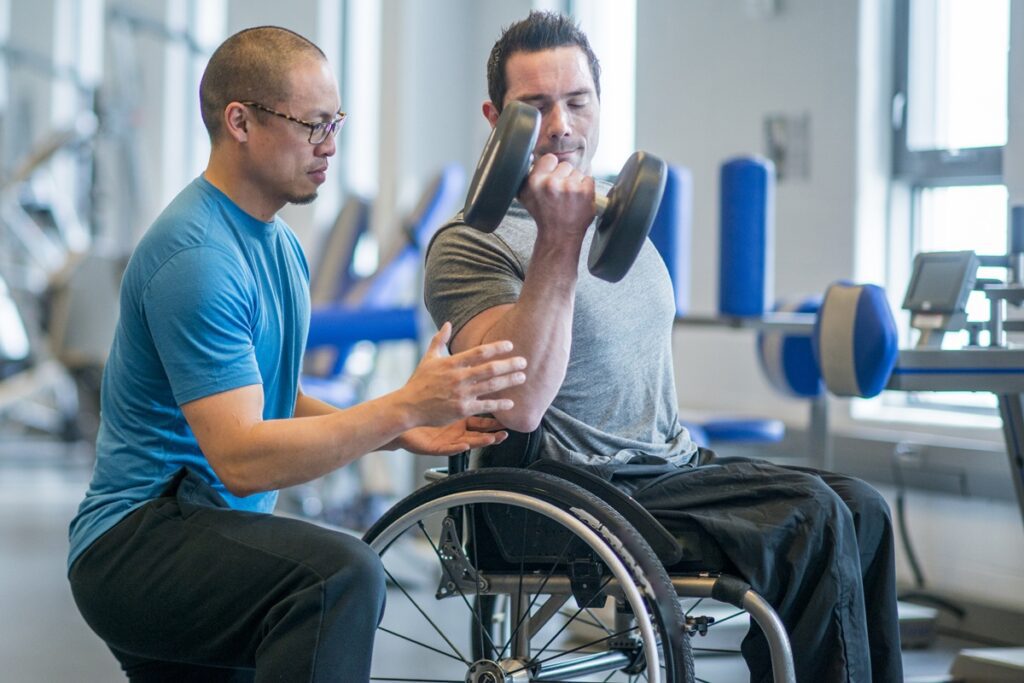
Why Exercise Matters for People with Paralysis or SCI
Exercise and strength training are beneficial for everyone, regardless of disability, but they are especially important for individuals with spinal cord injury (SCI) or other forms of paralysis. While barriers like limited mobility and access to equipment can make it easy to become discouraged, options like wheelchair strength training and adaptive exercise equipment for spinal cord injuries make fitness not only possible, but transformative. Regular accessible strength training for paralysis has been shown to improve energy, function, and quality of life. Before starting any new program, individuals with SCI or paralysis should consult a healthcare professional.
Three Key Types of Exercise (Stretching, Aerobic, Strength)
Every exercise program should consist of three different types of exercises: stretching, aerobic exercise, and strength training. Stretching before and after exercising not only helps prevent injury, but also improves flexibility, joints, and blood flow. Aerobic exercises, also known as cardiovascular exercises, improve heart health and circulation by increasing heart rate and blood flow. Lastly, strength training increases muscle mass, strength, and endurance through resistance exercises using tools such as free weights, resistance bands, strength machines, and even your own body weight.
Benefits of Exercise for Individuals with Spinal Cord Injuries (SCI)
Exercise isn’t just recommended—it can be life-changing for individuals with spinal cord injuries or paralysis. Consistent movement builds strength, improves energy, and restores function, making it easier to perform daily tasks and maintain independence. Physical benefits like improved respiratory function and circulation are especially impactful for those with SCI. In fact, research shows that regular strength and cardiovascular training significantly improves quality of life, mobility, and even psychosocial well-being in this population (NCBI). Beyond the physical, exercise also releases feel-good hormones that help reduce anxiety and depression, while boosting confidence and emotional resilience.
8 Exercises to Build Strength and Improve Circulation
The following eight exercises can help increase blood circulation and strength by providing a complete workout for those with spinal cord injuries (SCI). Remember, it is important to sit tall and engage the core during the workout. Maintaining good posture not only ensures maximum effectiveness but can also prevent injury.
1. Breathing Exercises
Controlled breathing is a powerful and often overlooked part of seated training, especially for individuals with SCI or paralysis. Start by sitting up as tall and straight as possible, engaging the core for support and relaxing the shoulders. Choose one of three grounding hand positions: palms resting upward on your legs, palms facing down, or palms pressed together in front of your heart. With your eyes closed, inhale slowly for a count of four, then exhale for another four-count. Repeat for four full cycles. This not only prepares the body for exercise but also improves lung function, mental focus, and parasympathetic regulation.
Recommended Equipment:
- Supportive wheelchair or firm-seated chair - encourages upright posture
- Optional yoga strap or bolster - can be placed behind the back for additional spinal support

2. Warm-Up Stretches
Before beginning any strength movements, a short warm-up helps activate muscles, reduce stiffness, and increase circulation. From a tall seated position, inhale deeply while lifting your arms overhead. Stretch high toward the ceiling, then gently bend to the left, holding for a four-count, and repeat on the right. Lower your arms, twist your torso to the left and grab the back of your chair, turning your head to the right. Repeat on the opposite side. Finish with a breaststroke-style arm motion extended in front of you for eight counts. Avoid leaning too far forward or dipping your head below your heart to prevent dizziness.
Recommended Equipment:
- Resistance bands (light tension) - can be added for dynamic arm movements or assisted stretches
- Chair with back support - helps maintain upright posture during lateral and rotational movements
Pro Tip: Why Resistance Bands Are a Smart Choice
Resistance bands are affordable, easy to travel with, and work well across all ability levels. Their ability to provide steady tension throughout the movement closely resembles the smooth resistance of pneumatic machines like those in the HUR line—making them a practical introduction to accessible strength training.
3. Biceps & Triceps Exercises
Biceps and triceps can be trained in a seated position using dumbbells, bands, or machines. If using dumbbells, ensure that the chair arms are lowered for a full range of motion. Start by holding the weights at your sides, curling them upward for a count of two, and lowering them back down slowly. Repeat 10–12 times. Next, hold the dumbbells at shoulder height, palms up, and continue curling in that elevated position. Finally, for triceps, raise the dumbbells overhead and, keeping elbows close to the ears, bend and straighten the arms behind the head with control.
Recommended Equipment:
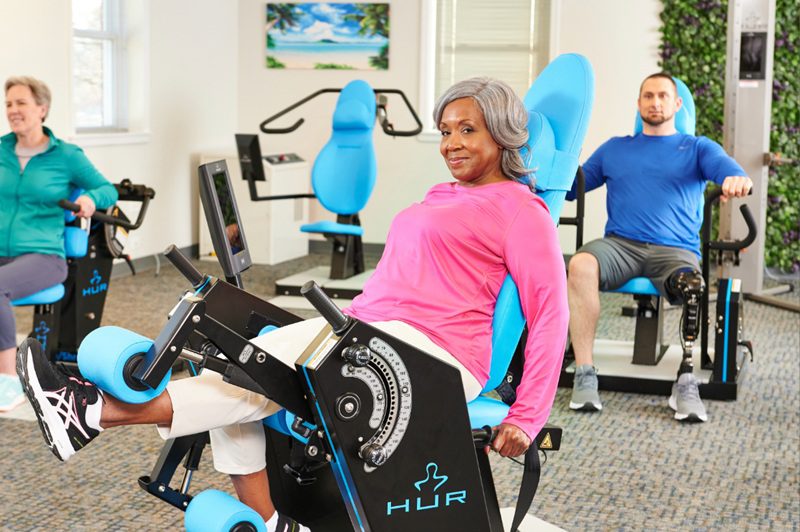
- HUR Easy Access Bicep/Tricep Machine – Smooth pneumatic resistance and wheelchair-friendly entry.
- Pulley system – Offers seated curls and extensions with adjustable angles.
- Resistance bands – Great for accessible, progressive loading.
4. Shoulder Exercises
Seated shoulder exercises improve postural control, upper body endurance, and functional mobility. Begin with light dumbbells in a “goal post” position — arms at shoulder height, elbows bent 90 degrees. Rotate the arms downward, then back up. Next, push the dumbbells overhead into an “A” shape, and return to the start. Finally, with arms at your sides, lift them straight out to shoulder height, keeping the motion smooth. Modify by bending the elbows if needed. Aim for 10–12 repetitions per movement.
Recommended Equipment:
- HUR Easy Access Push Up/Pull Down Machine – Supports overhead pressing and pull-down movements.
- Pulley system – Allows varied planes of motion.
- Resistance bands or dumbbells – Flexible and adaptable for group or home use.
5. Back Exercises
To work the back, rows can be performed from a slightly forward-leaning seated position. Holding dumbbells at the sides of the knees, pull the elbows back while squeezing the shoulder blades together. Avoid leaning too far forward to prevent dizziness. Alternate arms or pull with both simultaneously. Perform 10–12 repetitions with focus on muscle control and posture.
Recommended Equipment:
- HUR Pulley Machine – Ideal for horizontal and diagonal rows from a seated position.
- Resistance bands – Anchor low behind the chair to simulate a row.
- Dumbbells – Simple and effective for strengthening the upper and mid-back.
6. Chest Exercises
Chest exercises enhance pushing ability and improve breathing capacity. A fun and effective option is medicine ball tosses with a partner. From a seated position, toss the ball forward, high, or diagonally using chest power. Keep your back tall and arms engaged. Repeat in one-minute intervals, resting briefly between rounds for 2–3 sets.
Recommended Equipment:
- HUR Easy Access Chest Press – Provides smooth, symmetrical resistance for pressing motions.
- Medicine ball or resistance band – Useful for at-home or partner-based variations.
7. Core Exercises
Strengthening the core is vital for posture, spinal support, and balance. Begin by scooting forward in the chair and crossing arms over the chest. Lean back slightly, then return to an upright position, performing 10–12 seated sit-ups. For rotational work, place hands behind the head and alternate bringing each elbow toward the opposite knee. To increase difficulty, have a partner hold one end of a resistance band while you hold the other end out in front of you. Keep your torso square and resist rotational force for 30 seconds, then repeat on the other side.
Recommended Equipment:
- HUR Abdominal and Back Extension Machines – Designed for controlled trunk strengthening.
- Resistance bands – Excellent for anti-rotation and partner-assisted core work.
- Stable chair or wheelchair – Crucial for maintaining balance during movement.
8. Cool Down - Chair Sun Salutation
Cooling down after a seated workout helps regulate breathing, reduce muscle tension, and signal the body to transition into recovery. Begin in a seated position with your hands pressed together in front of your chest. Inhale deeply as you lift your hands overhead, then exhale as you slowly open your arms wide and bring them down to your sides, gently leaning forward. Return to the upright position and repeat the movement 2–3 times, focusing on slow breathing and relaxation throughout.
Recommended Equipment:
- Supportive chair or wheelchair – Ensures balance and safety during movement.
- Breath pacer app or timer (optional) – For guiding inhalation/exhalation counts in group settings.
Frequently Asked Questions: Exercise & Strength Training for People with SCI and Paralysis
1. Can people with spinal cord injuries safely perform strength training?
Yes — with the right programming, individuals with SCI or paralysis can engage in effective strength training. Many adaptive exercises are designed to be performed seated and can be customized using resistance bands, light weights, or accessible equipment like the HUR Easy Access line.
2. What types of equipment are best for individuals with limited mobility?
Accessible strength training machines, resistance bands, and pulley systems that accommodate wheelchair users are ideal. Equipment with low or pneumatic resistance, like HUR SmartTouch, provides smooth, measurable progress while ensuring safety.
3. How often should someone with SCI exercise?
It depends on the individual’s condition and ability, but most benefit from 2–3 strength sessions per week, complemented by stretching and light aerobic activity. A healthcare provider or therapist should guide frequency and intensity.
4. What are the psychological benefits of exercise for those with paralysis?
In addition to improved circulation and strength, exercise boosts mood, reduces anxiety, and improves self-confidence — all of which contribute to a higher quality of life.
5. Are these exercises appropriate for group fitness or wellness programs?
Absolutely. These movements can be adapted to small-group formats in senior centers, rehab gyms, or wellness programs using accessible equipment and proper supervision.
6. What should wellness professionals consider when designing exercise plans for people with SCI?
Safety is key, but don’t be overly cautious — clients with SCI often benefit from progressive resistance and challenge. Always prioritize posture, breathing, and core stability, and use adaptive equipment to meet clients where they are.